The Last Mile of Executive Search: Turning Candidate Conversations Into Defensible Shortlist Decisions

October 13, 2026 – As executive search becomes more data-driven, firms are under growing pressure to show clients not only who made the shortlist, but why. That is putting greater emphasis on consistent evaluation, clearly defined criteria, and stronger evidence around leadership capability, risk, and fit. The shift is also creating a larger role for AI in helping search teams organize candidate information while keeping human judgment at the center of the final recommendation. Hunt Scanlon Media recently sat down with Tammy Wang, founder of Simsola AI, to discuss AI, candidate evaluation, and building more defensible shortlists. So where does Dr. Wang see the biggest breakdowns occurring between candidate interviews and the final shortlist, and why are those problems so difficult for search teams to solve consistently?
“The breakdown often shows up when the shortlist is formed and the client pushes back,” she explained. “From the search firm side, the challenge is that the firm may not be able to convince the client that the list is right, the client may not feel it meets the agreed criteria, and they ask to see more candidates.”

“It is difficult to solve consistently because this is really a trust problem, not a sourcing problem,” Dr. Wang added. “It comes down to showing the right signals so the client understands how the list was built and has confidence in the process.”
By the time you reach the shortlist, everyone on it checks the boxes, so a defensible shortlist cannot rest on the resume alone, according to Dr. Wang. “It has to be grounded in criteria the client agreed to before the search began, along with clear evidence showing how each candidate measures against those criteria,” she said. “The less obvious differences usually come down to how someone leads: how they communicate, think through a difficult problem, execute, and build a team. Those are the hardest qualities to show on paper. A shortlist becomes defensible when the client can see the evidence, understand the logic, and clearly connect each candidate’s strengths to the requirements of the role.”
Creating greater consistency in candidate evaluation starts with standardizing the criteria and the evidence used throughout the search process, Dr. Wang explained. “Great recruiters will each run an interview in their own way, and that is part of the craft,” she added. “What should remain consistent are the role requirements, defined in observable terms, and the method for collecting evidence, regardless of which partner, consultant, or researcher was in the room. Consistency comes from a shared language, common standards, and a clear workflow.”
What Role AI Should AI Play
“AI is especially useful for the parts of the job that people tend to handle unevenly,” Dr. Wang said. “It can bring together notes, transcripts, and assessments from multiple conversations, map deeper insights from what was said to the agreed criteria, and identify gaps or contradictions using the same structure for every candidate. Human judgment should remain firmly in control of the recommendation, the tradeoffs, the relationships with the candidate and the client, and ultimately the decision itself.”
As clients expect more evidence behind candidate recommendations, the role of the search consultant changing when it comes to explaining tradeoffs, risks, and why one executive should advance over another. “The consultant is moving from simply presenting candidates to making a case for them,” Dr. Wang shared. “Thirty years of pattern recognition is still what clients pay for, and that experience is real, but trust me is no longer enough on its own. Candidates are more polished than ever, so clients are less willing to rely solely on first impressions and increasingly want to understand the reasoning behind a recommendation: what the true capability is, what was uncovered, the tradeoffs between two leaders, the risks associated with each, and how those risks could be managed. That shift makes the consultant more of an advisor, and the advice has to be built on the why and backed by evidence.”
Upcoming Webinar
Join Hunt Scanlon Media and Simsola AI on October 15 for an in-depth discussion on the “last mile” of executive search: the critical stage between candidate interviews and the final shortlist decision. Moderated by Dr. Wang, the session will bring together leaders from executive search and corporate talent acquisition to explore how firms can strengthen candidate evaluation, improve consistency across teams, and use technology to support better decision-making without replacing human judgment.
Free registration … Click here to sign up!
Moderator
 Tammy Wang is CEO and co-founder of Simsola AI, where she’s built an evidence-based conversation analytics platform that helps organizations identify strong leaders at scale. Her technical and leadership background spans Microsoft, Zillow, Riviera Partners, and Korn Ferry, where she served as senior vice president of data science. Specializing in artificial intelligence and data science, she co-founded Simsola AI to replace subjective, inconsistent evaluation methods with data-driven analysis that gives organizations clear, measurable insight into leadership potential.
Panelists
 Josh Narva is a partner and the head of talent advisory at Riviera Partners. His unique background spans the full lifecycle of technology companies: as an early employee at two Sequoia Capital–incubated startups, as head of talent at Sonos during its scale-up from 350 to nearly 1,800 employees and eventual IPO, and as a talent advisor in the office of the CEO at Google.
 Jack Leitch is head of global talent acquisition programs at Uber, where he leads transformation initiatives for a 400+ person global TA organization managing over one million applications annually. His work spans quality of hire, selection and assessment, recruiting technology, AI-enabled talent systems, and vendor strategy. He focuses on turning talent acquisition into a measurable, evidence-driven decision system that improves hiring outcomes at scale.
 Ayla Maloney is managing partner and chief people officer of The Christopher Group. For over nine years, she has led and recruited senior-level searches across diverse industries and sectors. Her partnerships range from Fortune 500 companies to startups, mom-and-pop shops, private equity- and VC-backed businesses, and founder-led organizations. Known for her high-touch and transparent approach, Ms. Maloney is passionate about connecting with leaders to uncover career, life, and business-enhancing solutions.
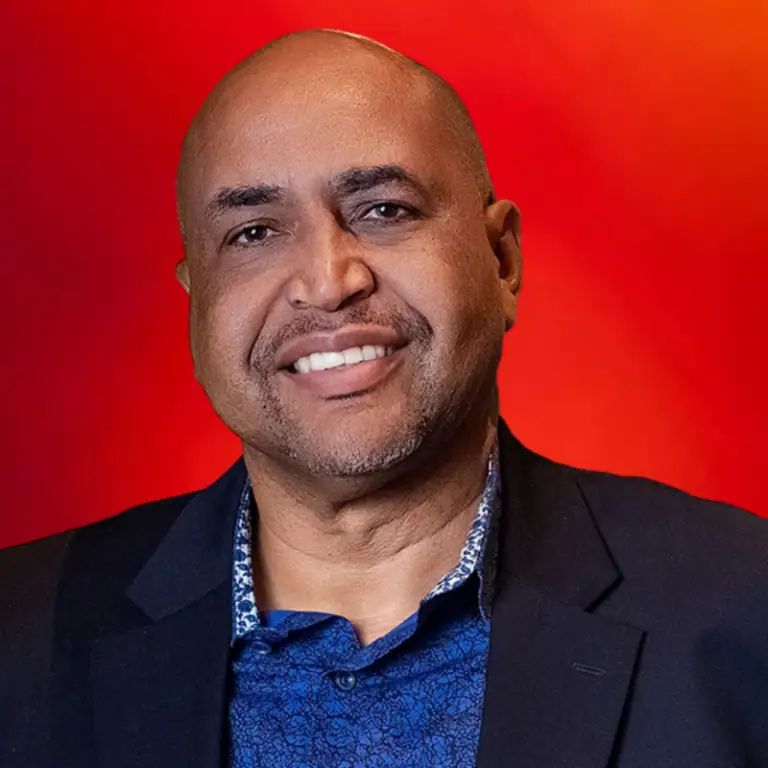 Guy O. Gomis is SVP, partner – managing director, AI, technology, data & analytics group at BrainWorks. He established the firm’s tech, data & analytics/Insights practice in 1995. Mr. Gomis has been in the executive search industry since 1993, and he has forged strategic partnerships with industry leaders including Nike, Walmart, American Express, and Starbucks. Guy and his team have conducted thousands of searches across a broad range of industries including tech, retail, financial services, consumer packaged goods, pharmaceutical/healthcare, and marketing services.
Attendance is free. To learn more and register to attend, click here!
Contributed by Scott A. Scanlon, Editor-in-Chief and Dale M. Zupsansky, Executive Editor – Hunt Scanlon Media