Executive Hiring Tightens Across Healthcare IT and Life Sciences

July 16, 2025 – In the evolving landscape of healthcare IT and life sciences, executive hiring is undergoing a transformation marked by elevated expectations and tighter scrutiny from private equity investors and growth-focused organizations. With an increased demand for leaders who not only bring a track record of successful exits but also embody a “player-coach mentality,” companies are seeking executives who can strategize at a high level while remaining actively engaged in the day-to-day execution. The premium is on candidates who have operated in high-growth, regulated environments and possess an “in-market bias”—individuals who understand the unique nuances of the healthcare ecosystem and can make an impact quickly in complex, fast-paced settings.
To better understand these shifts, Hunt Scanlon Media recently spoke with Mike Silverstein, managing partner and executive search leader of Direct Recruiters Inc.’s healthcare IT division & life sciences practice.

Mr. Silverstein also leads DRI’s efforts in recruiting for PE and VC portfolio companies. He founded the healthcare IT practice in 2008. Under his leadership, the life sciences practice has expanded and the HIT practice area has grown significantly year-over-year. Additionally, in 2011, Mr. Silverstein helped found what is now DRI’s hospital IT group as a managing partner, which is concentrated largely on hospital IT staffing and consulting.
Throughout the interview, Mr. Silverstein shares a strategic approach to talent acquisition—one that emphasizes cultural fit, prior experience in entrepreneurial environments, and a deep understanding of industry workflows. Drawing on his advisory roles with AI-native health tech startups and a curated healthcare leadership network, he offers a front-row view into the emergence of new executive skill sets driven by technological innovation. His insights reveal not only how top-tier talent is identified and assessed, but also how trust, confidentiality, and post-placement integration play a critical role in ensuring long-term success for both clients and candidates.
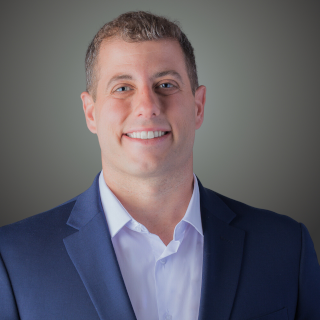
Mike, what trends are you currently seeing in executive hiring across the healthcare IT and life sciences sectors?
My investor clients are probably being as picky as I have ever seen in regard to hiring executives. First off, most searches are starting out looking for executives with previous experience taking a firm to a successful exit. Experience in a PE backed company used to be the table stakes but those have escalated. Additionally, I probably hear the term “player-coach mentality” ten times a week. To me that means sponsors are really keying in on candidates that are not only strong “strategists” but are also willing to “lead from in front” and get their hands dirty. One of the chief complaints I hear when I am hired to do a “replacement” search of an executive that is failing is that they aren’t engaged enough in the day to day of the business. Candidates that have an “in market bias” are in the highest demand right now….and rightfully so.
How do you tailor your executive search strategies when working with companies in highly regulated environments like healthcare and life sciences?
My practice is very vertically focused for this exact reason. In my opinion the learning curve and barrier to entry for healthcare/life sciences operators is extremely high and it is only in a few circumstances that I advocate for going outside of the healthcare/life sciences swim lane to source for candidates. FP&A, engineering and demand gen/digital marketing are typically the only functions I will encourage my customers to cast a wider net on as these functions can be industry agnostic. Any function that touches the product or customer, in my humble opinion, should be reserved for industry veterans. The prominence of the clinical influence in healthcare quickly snuffs out candidates that don’t speak the language and haven’t been through the trials and tribulations. It’s not to say all the best talent is in healthcare, it’s just that the complexity of the industry stacks so many cards against candidates that don’t come from the space. By the time non- healthcare/life sciences candidates get their feet under them with the domain, the clock from the sponsor has already been ticking for months.
Can you walk me through your approach to identifying candidates who have both technical expertise and a strong understanding of healthcare workflows or scientific rigor?
Because we are vertically focused entirely in healthcare, experience in the industry is generally a prerequisite to be included in our candidate pool. Additionally, healthcare is an exceptionally broad term and therefore we rely heavily on our healthcare and life sciences market expertise to ask critical and detailed questions during our intake discussions to get a deep understanding of the specific experiences that will help solve the client’s main business driver. It can take months to years to get up to speed on a particular segment of healthcare if a candidate does not come from industry. Missing on this particular area of understanding can be the primary reason for a miss-hire. Candidly, I tell prospective clients that “if healthcare understanding is not a prerequisite for the role you are hiring for, we are probably not the right search partner.” That’s how important it is.
What challenges do your clients commonly face when hiring executive talent in these sectors, and how do you help overcome them?
One of the key challenges is that health systems, health plans and pharma companies take one to two years in their buying cycles and therefore clients of mine often have a hard time getting a quick read on if a candidate is getting up to speed and making a real impact. The commercial results are often a lagging indicator and therefore we focus on finding candidates that come to the table with a near term plan to make an impact and a process and data-oriented approach that is measurable and has quantifiable steps that can be communicated to the broader team on the way to the result. This helps alleviate the feeling of the client “flying blind” after making a hire as the inputs of the process become a tangible way to calculate if the candidate is on the road to making the proper impact.
“One of the key challenges is that health systems, health plans and pharma companies take one to two years in their buying cycles and therefore clients of mine often have a hard time getting a quick read on if a candidate is getting up to speed and making a real impact.”
How do you assess cultural fit and leadership adaptability in candidates for organizations undergoing digital transformation or biotech scale-up?
In our work that is primarily focused on partnering with growth companies, we generally focus on working with candidates that have gone through a growth experience with a young company at least once in their career. If a candidate has only worked at Fortune 500 companies their entire career, the shock of being dropped into a young, growing company is real and oftentimes overwhelming and even debilitating. If a candidate has only worked in a large, corporate environment, they are almost ubiquitously trained to stay in their assigned swim lane, and they innately lack the intrapreneurship/resourcefulness to be successful in a young (often chaotic) company; especially now that most of these companies are entirely remote/virtual. Quickly building relationships and making a point early on to figure out how decisions are made and how to make change happen (without ticking off all of your coworkers) is one of the most underrated reasons a candidate succeeds or fails in a new role. The tangible way we try to mitigate that during the recruitment process is by focusing on candidates that have at least gone through the experience once in their career before we get to them.
How do you stay updated on emerging roles and skills needed in digital health, AI-enabled diagnostics, or next-gen therapeutics?
I am personally an advisor to a half dozen seed through series B, AI native, health tech companies. My role is to help them plan from a human capital perspective as well as connect them to influential advisors and investors in the space. As a result, I regularly am in discussions about new technologies (agentic AI, LLMs etc.) in addition to having a front row seat to the breakneck pace at which technology development is accelerating. I also host a proprietary networking group with over 600 healthcare leaders consisting of health tech investors, SaaS company operators, consultants and hospital, health plan and life sciences leaders. This group gets together for a one-hour webinar monthly and I curate speakers each month to keep the group educated on the latest trends, technology and changes in the market. It is invaluable as far as staying on top of the ever-changing market and doing so while getting feedback from a swath of the most talented and influential people in the healthcare ecosystem.
What does your post-placement support or onboarding advisory look like for executive hires in complex scientific or health tech environments?
My group places full, end to end C-suite but also does full vertical team builds underneath those leaders. As a result, we stay engaged with our clients year-round across the totality of their business. Juxtaposing that against firms that only place C-suite and interact with their customers once every 18-months or so when they need to hire an executive; our support doesn’t stop at the placement of the leader. In fact, we go well beyond advising, we actually help build the teams that allow that leader to be successful from a tactical execution perspective. As a result of this year-round connectivity, we get to know our clients’ culture, hot buttons and success factors at a very deep level and that insight informs every subsequent placement we make with the client and ultimately like an LLM, I would argue we get better with every subsequent project.
What’s your approach to confidential searches, particularly for executive transitions in competitive or publicly visible environments?
We rely very heavily on our relationships with the key talent in our markets to protect our clients by leveraging the bidirectional trust they expect with us in regard to their own career. Because we make a concerted effort to build network and relationships year-round and not only in a “just in time” manner when we are working on a search, our candidates view us as career consultants and advisors and instill a ton of trust in us (in return) for many years. We offer them full confidentiality, and they know that reciprocating that is a key part of the arrangement. Additionally, because we are very deep and tenured in our niche, it is very rare that we are talking to an executive totally cold at the start of a confidential search. This tenured network allows us to operate with less constraints from a trust perspective and go after the key, top candidates we need to get to without a concern of breaching trust and confidentiality on behalf of our clients.
Related: The Future of Healthcare Leadership: Navigating AI, Innovation, and Talent Demands
Contributed by Scott A. Scanlon, Editor-in-Chief and Dale M. Zupsansky, Executive Editor – Hunt Scanlon Media