CHRO Perspectives: Looking Ahead to 2026

October 14, 2025 – There is a real bullishness from senior HR leaders about the impact and value they can add to organizations going forward, according to a recently released report from Leathwaite. This is starkly juxtaposed with the prevailing sentiment in 2023 and 2024 when HR leaders felt over-stretched and burnt out.
Senior HR leaders now feel personally ready and re-energized for what’s ahead. Over 70 percent are confident they can meet business expectations, and 81 percent are optimistic about the next 12–24 months, showing that optimism persists despite the geopolitical and financial headwinds facing many companies and sectors. Eighty percent of senior HR leaders in the U.K. and EU feel optimistic about the next 12 to 24 months. Eighty-one percent of senior HR leaders in North America feel optimistic about the next 12 to 24 months.

“Many HR leaders feel personally prepared to step up and drive meaningful change, and believe they are well set up to meet the business’s broader expectations,” the Leathwaite report found. “Yet, a gap remains between this individual confidence and the confidence they place in their organization’s overall direction and performance. They trust in their own ability to make an impact but remain cautious about whether the business is equally ready to harness that leadership and deliver on its ambitions. As CEOs and boards face increasing pressure in a volatile macro-economic environment, HR leaders are being asked to drive top team effectiveness, bringing executive committees and boards together, bridging siloes, and providing hands-on support through coaching and facilitation.”
From Preparation to Action
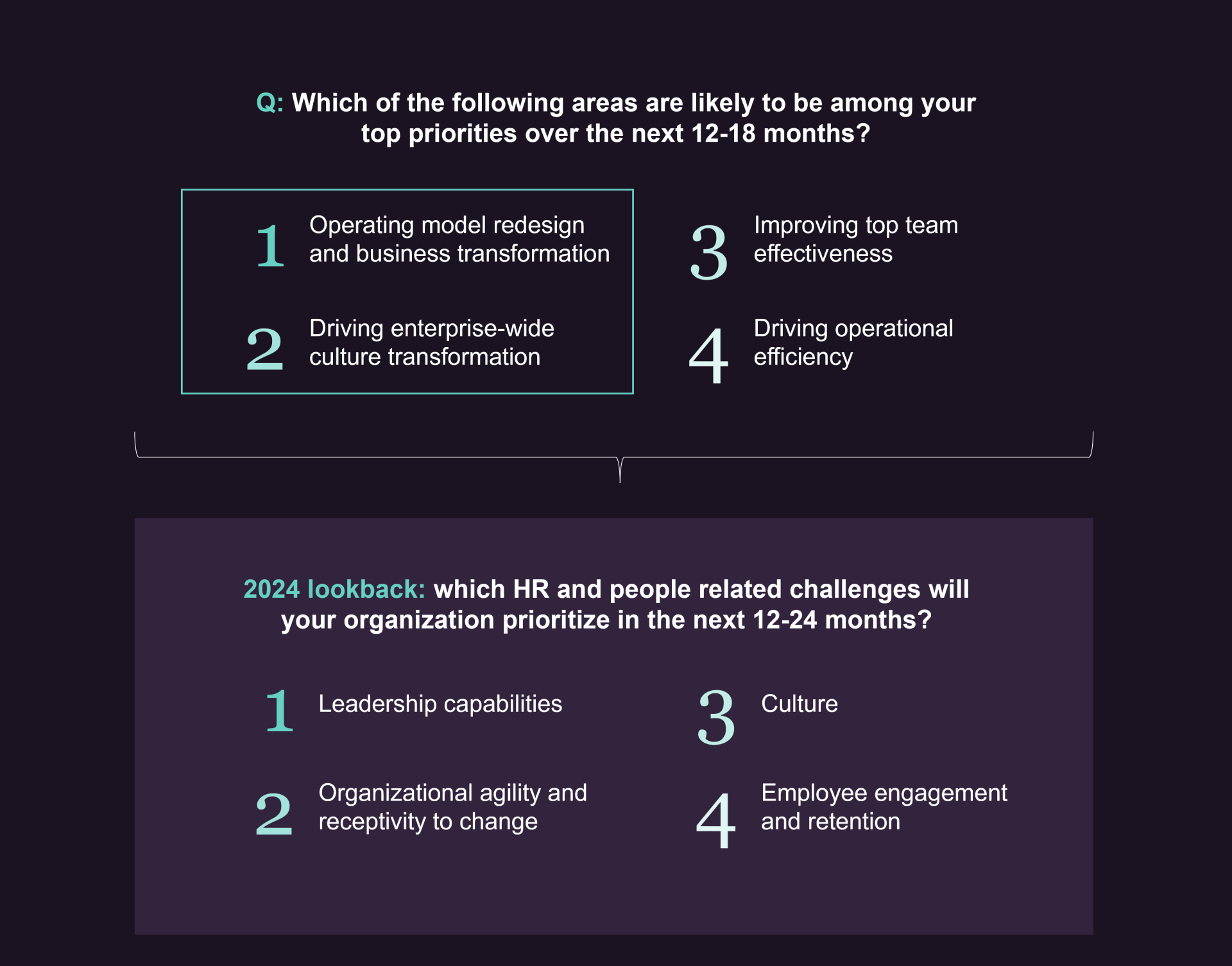
While saying that transformation remains at the top of the HR agenda will surprise nobody, whereas in Leathwaite’s 2024 report, sights were set on culture change and leadership capability, 2025’s respondents are prioritizing full-blown enterprise transformation across operating model, culture and capability. And, what’s more, a full 69 percent feel that the function has the capability and capacity to deliver on the next 24 months’ priorities.
“We may be reading too much into this particular data point, but employee engagement and retention have fallen out of the top five priorities,” the Leathwaite report said. “Is it a coincidence that recent studies have shown employee engagement is at its lowest in a decade? And does it need to be in the top five if economic uncertainty is leading to unusually low levels of attrition?”
Mind the (Leadership) Gap
An undisputed leadership quality, apparent throughout 2025 yet gaining significant importance during and post-COVID, is resilience, the Leathwaite report explained.
Related: The CHRO’s Role in Private Equity: Driving Value at Speed and Scale
“We require executive leaders to seamlessly navigate an era of constant change and permacrisis while remaining laser focused on long-term goals and aspirations,” the study found. “With only 15 percent of respondents confident in the effectiveness of their organization’s executive leadership team, it is apparent that we still have a way to go before institutions engender both organizational and psychological resilience. This, coupled with performance concerns connected to executive effectiveness, illustrates the continued focus for institutions to build effective leadership cohorts.”

Critical is an organization’s ability to prepare current and future leaders. Leathwaite’s results show that there is a worryingly large proportion of businesses with i. siloed views on talent and, ii. a lack of external benchmarking. The study noted that both are significant contributors to succession planning ineffectiveness.
Leathwaite also noted, given conflicting business priorities over recent years, that succession planning has become more reactive, prioritizing institutional knowledge over future business needs. With fewer than 50 percent of HR leaders feeling confident in their organization’s ability to prepare future leaders, and only eight percent as very confident, we note a critical vulnerability in leadership pipeline development. BCG, McKinsey, Deloitte and PwC show that data-driven succession planning and external benchmarking remain essential to building robust leadership pipelines.
Related: Why Interim CHROs Are Becoming Essential in a Rapidly Changing Workforce
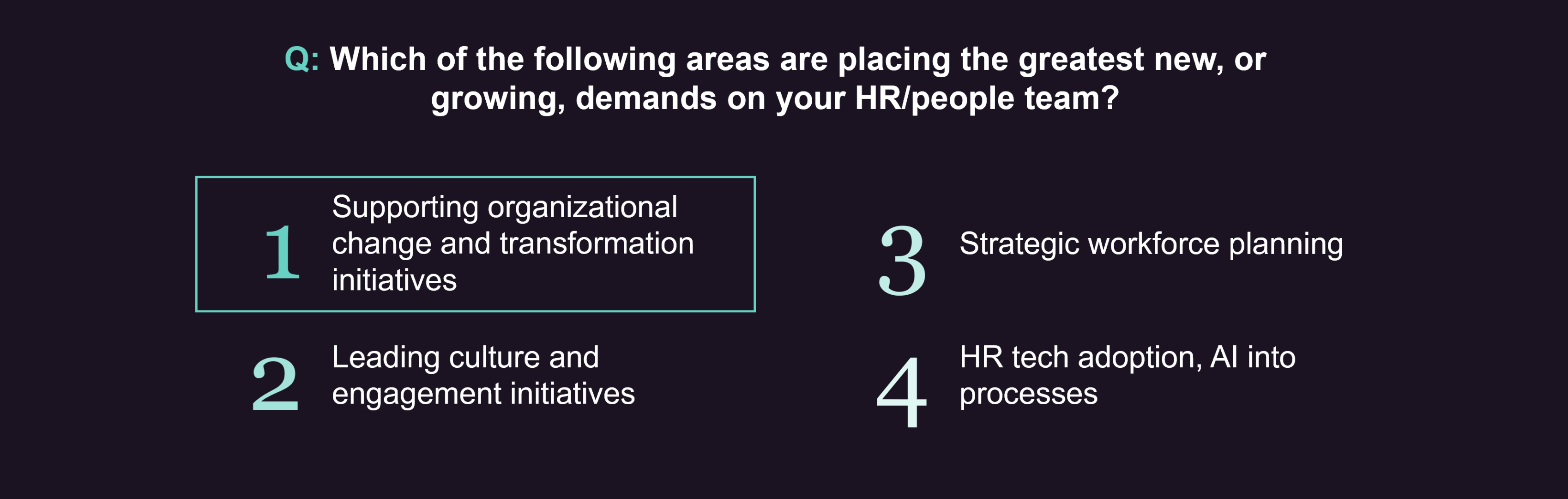
Key HR priorities include operating model redesign, culture transformation and improving top team effectiveness, which align with the function’s biggest blockers: leadership capability gaps and functional siloes, according to the Leathwaite report. As such, the CHRO and its leadership team must target the root cause of executive dysfunction on both an individual basis (focusing on skills, mindset and capability) and structural (by removing barriers in order to drive collaboration and alignment).
“The good news is that we are beginning to see functional siloes break,” the Leathwaite report said. “With Moderna recently combining their HR and Technology functions, and AI not adhering to structural barriers, we are witnessing a new cohort of leaders. Leaders that are energized by cross-functional capabilities that drive speed and innovation. That recognize the competitive advantage of agility at scale. That understand the commercial impacts of creating a structure that supports quick decision making.”
The Impact of AI
In our 2024 survey, 42 percent of HR leaders identified AI as the biggest disruptor to the function. In 2025 an overwhelming majority (as many as 81 percent) agree that AI will significantly impact the function. However, in 2025 HR leaders still lack confidence in their organization’s ability to adopt and scale AI in a way that adds strategic value.

Indeed, only 13 percent of HR leaders feel confident that their organization is ready to scale AI effectively which, despite the intervening 12 months, actually represents a two percent decrease in confidence from 2024’s responses.
Leathwaite is an executive search and human capital specialist firm, delivering an interconnected range of executive search, executive interim, and data and insight services. Established in 1999, the firm has developed key international client partnerships across a range of industry sectors. Leathwaite has a network of international offices in London, New York, Los Angeles, Dallas, Hong Kong, and Zurich.
To read Leathwaite’s full report, click here!
Contributed by Scott A. Scanlon, Editor-in-Chief and Dale M. Zupsansky, Executive Editor – Hunt Scanlon Media