Unlocking the Value of Diverse Leaders

November 6, 2025 – Diversity in leadership is no longer a discussion about representation — it’s a defining factor in organizational performance. Across industries, companies are realizing that when leadership teams reflect a range of experiences, perspectives, and voices, they make better decisions and drive stronger business outcomes. Beyond simply filling seats, true leadership diversity transforms how teams think, collaborate, and solve complex problems. It’s about cultivating environments where difference is not just welcomed but leveraged as a strategic advantage — a shift that is redefining what effective leadership looks like in today’s world.
Teamalytics recently discussed how diverse perspectives within executive leadership teams will drive maximum results. The company’s Troy Grabel recently sat down with Deondra Donald, Shalee Lehning, and Missy Forlani, who have collectively spent decades leading, coaching, and consulting across various organizational levels. All three strongly believe that diverse leadership is not just an ideal but a powerful catalyst for success. Their lived experience and professional insight as a Teamalytics coaching consultant set the stage for a deeper look into the data and the real-world impact of dynamic leadership.

The evidence is overwhelmingly clear: companies with greater gender diversity on executive teams are 39 percent more likely to outperform their profitability goals (McKinsey), and gender-diverse teams make better decisions 87 percent of the time (Harvard Business Review). Furthermore, diverse leadership drives 19 percent more innovation revenue (Boston Consulting Group). “Despite these compelling statistics—which present a clear business case—many organizations still struggle to advance women into leadership roles,” the Teamalytics report said.
Ms. Donald, Ms. Lehning, and Ms. Forlani share their perspective on how to unlock the power of diverse leadership teams. They are committed to changing this by helping organizations leverage the full potential of their talent, ensuring that representation is recognized not as symbolic but as truly strategic and effective.
“Having served as a woman in senior HR executive and executive coaching roles, I’ve spent decades helping leaders grow into their potential, and I’ve seen firsthand the transformative power of diverse leadership,” said Ms. Forlani. “The evidence is clear: when women are at the table, businesses thrive.”
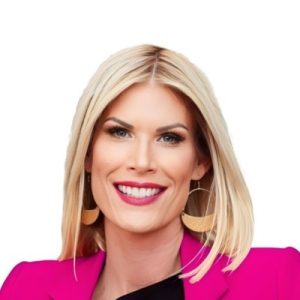 Missy Forlani is VP of coaching & team solutions. She is a people-first executive coach, speaker, and advisor to executives and leaders across diverse industry sectors. With expertise in corporate talent, executive coaching, team development, leadership and educator training, strategic HR consulting, and change management and communication, she focuses on growing high performers, maximizing diverse teams, and multiplying the influence of the leaders she engages with.
Companies with women in leadership roles don’t just perform—they outperform, Ms. Forlani. “These stats above aren’t just statistics—they’re a business case,” she said. “Innovation, smarter decisions, stronger financial outcomes: these are the direct results of having varied perspectives at the table. And yet, many organizations still struggle to reflect this diversity in their leadership ranks.”
“The issue isn’t a lack of qualified women,” Ms. Forlani said. “It’s often a lack of intentional systems to develop and elevate them. High-potential women are still too often overlooked for stretch roles or receive feedback that lacks clarity. Leadership models still too frequently reward traits that exclude the power of collaboration, empathy, and balanced decision-making—qualities many women leaders excel in.”
Related: The Strategic Architects Advancing Diversity, Inclusion, and Business Excellence
“At Teamalytics, we’re committed to changing that,” Ms. Forlani said. “We help organizations build leadership pipelines that reflect the full potential of their talent by making leadership behaviors visible, measurable, and coachable. Representation isn’t just about equity—it’s about effectiveness. When leadership reflects the diversity of the world we live in, everyone wins.”
Path to Leadership
“As a Black woman in leadership who has coached and consulted across corporate boardrooms, schools, and executive teams, I have seen firsthand that presence, performance, and potential do not always equal promotion,” said Ms. Donald. “For many women, especially women of color, the path to leadership is not a straight line. It is a layered journey that requires not just skill but resilience, strategic relationships, and clarity in the face of inconsistent feedback.”
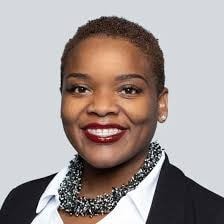 Deondra Donald is SVP of coaching & team solutions. She is an innovative executive operations leader who has a deep passion for developing teams, motivating others, and enhancing the culture of the workplace. Ms. Donald has been collaborating with Teamalytics since 2019 and has excitedly joined the team in 2021. She continues to work with senior executives and leaders throughout the U.S.
“What I have learned, both through my own rise and in coaching others, is that high performance alone is not enough,” Ms. Donald said. “Visibility, voice, and value must work together. I have watched brilliant women shrink to fit the rooms they have earned a seat in, not because they lack confidence, but because they were never coached on how to own their impact in ways that align with their authentic selves.”
“That is why I am passionate about measurable behavioral coaching,” Ms. Donald added. “Tools like Teamalytics do not just give you a leadership scorecard; they offer a mirror. They help women stop internalizing vague critiques like you are too much or not quite ready and start getting language around their leadership wiring, communication style, and blind spots. When women are equipped with that kind of clarity, they do not just take up space; they reshape it.”
When Diverse Women Lead
“Representation is not symbolic,” Ms. Donald explained. “It is strategic. When diverse women lead, they shift team dynamics, influence culture, and model what courageous leadership looks like. My role and our mission at Teamalytics is to help unlock that leadership voice and ensure it is heard, respected, and retained.”
Related: Solving the Diversity Challenge in Executive Recruitment
“As a woman who has had the privilege of leading, competing, and now coaching leaders at every level, I strongly believe this conversation matters,” said Ms. Lehning. “The gap in women’s representation in leadership roles isn’t about a shortage of capable women; it’s about a system that hasn’t fully evolved to recognize, develop, and advance them.”
 Shalee Lehning is VP of coaching & team solutions. Throughout her career, her goal has been to assist in strategically elevating, empowering, equipping, and inspiring individuals, teams, and organizations to identify potential, maximize performance, and achieve goals. Her life experiences include a variety of ages, gender, and diverse socio-economic and ethnic backgrounds. Ms. Lehning brings a broad expanse of personal and professional leadership skills and experiences to Teamalytics, including a career in the WNBA as a professional basketball player, an NCAA Division I women’s basketball coach and a collegiate athletic academic advisor.
“But even with the data, many companies are still struggling to advance more women into leadership roles,” she said. “And from what I’ve seen — both in my own experiences and in coaching leaders inside companies — it’s rarely about a lack of capability. Instead, there are often subtle barriers that make the path harder to navigate.” Ms. Lehning points out the following:
- Sometimes, women don’t have access to high-visibility assignments or sponsorship relationships that build readiness for the next level.
- Many receive feedback that’s more vague than actionable, leaving them unsure of what to adjust to keep growing.
- Often, leadership models still reward one narrow style, one that doesn’t always recognize the value of collaboration, emotional intelligence, or balanced risk-taking that many women naturally bring.
“These aren’t unsolvable challenges,” Ms. Lehning said. “But they require more than just good intentions or diversity targets. They require intentional development and clarity around behaviors that build leadership presence, influence, and impact. That’s the work we care deeply about at Teamalytics. Our focus is on helping leaders see what it feels like to be led by them and identifying the specific behaviors that they can refine to grow into the leaders their organizations need.”
“Representation isn’t just about fairness. It’s about fully unlocking the potential that’s already in the room,” Ms. Lehning continued. “It’s time to move from intention to action – by developing, promoting, and equipping diverse leaders, we build stronger teams, smarter strategies, and more successful organizations.”
Related: Essential Strategies for Effective Diversity Recruiting
Contributed by Scott A. Scanlon, Editor-in-Chief and Dale M. Zupsansky, Executive Editor – Hunt Scanlon Media