Preparing for the Presidency is About More Than Credentials

November 10, 2026 – Preparing for a university presidency requires a deliberate approach to leadership development, one that extends well beyond academic achievement and experience to encompass the broader demands of institutional leadership. The question Funk Associates hears most often in our work is a simple one: “What can I do to best prepare myself to be a serious candidate for a president’s position?”
“The answer is not the checklist people expect,” R. William “Bill” Funk, founder and CEO of Funk Associates, told University Business. “The university presidency is among the most complex and consequential leadership roles in American public life, and those who arrive at it well prepared do so not by accident but by intention,” he explained. “Preparation is not about collecting credentials. It is about building the capacity to lead an entire institution.”

“It starts where you are,” Mr. Funk said. “Excellence in your current role is the foundation of everything else. Search committees and boards study track records closely, and the people who advance to presidencies are almost never those who were merely adequate in prior roles. They are the ones who left each position measurably better than they found it.”
Deliver results, meet your commitments, and be known as someone who can be trusted with responsibility, according to Mr. Funk. “Reputation in higher education is built incrementally—and it travels quickly in a field that is smaller than it looks,” he said. “No one makes this journey alone. Identify a mentor—ideally a sitting or former president, provost, or senior leader—who will offer candid guidance and help you see your own blind spots. A good mentor challenges your thinking, opens doors to networks you might not otherwise reach, and helps you navigate the political complexities of academic life.”
Be intentional about it; don’t wait for mentorship to find you, Mr. Funk explained. “Over time, seek more than one mentor,” he added. “A sitting president, a board member, and a peer each teach something distinct. Then broaden your aperture. Presidents must lead the whole institution, not just the slice they came from.”
“If your background is academic affairs, find ways to work alongside colleagues in finance, student life, facilities, advancement, or government relations,” Mr. Funk said. “Serve on cross-functional task forces. Volunteer for assignments that stretch you beyond your comfort zone. The candidate who understands the faculty senate but not the budget office—or who knows research but not enrollment management—arrives at a serious disadvantage. Breadth of exposure signals readiness for institution-wide leadership.”
3 Literacies are Non-Negotiable
Communication. The presidency is, in large part, a communications role: trustees, donors, legislators, faculty, students, parents, alumni, the press—often on the same day, often on difficult topics, according to Mr. Funk. “Write clearly, speak persuasively, listen actively,” he noted. “Seek chances to present publicly and to represent your institution externally. Consider working with an executive coach. Presence and composure matter enormously to boards.”
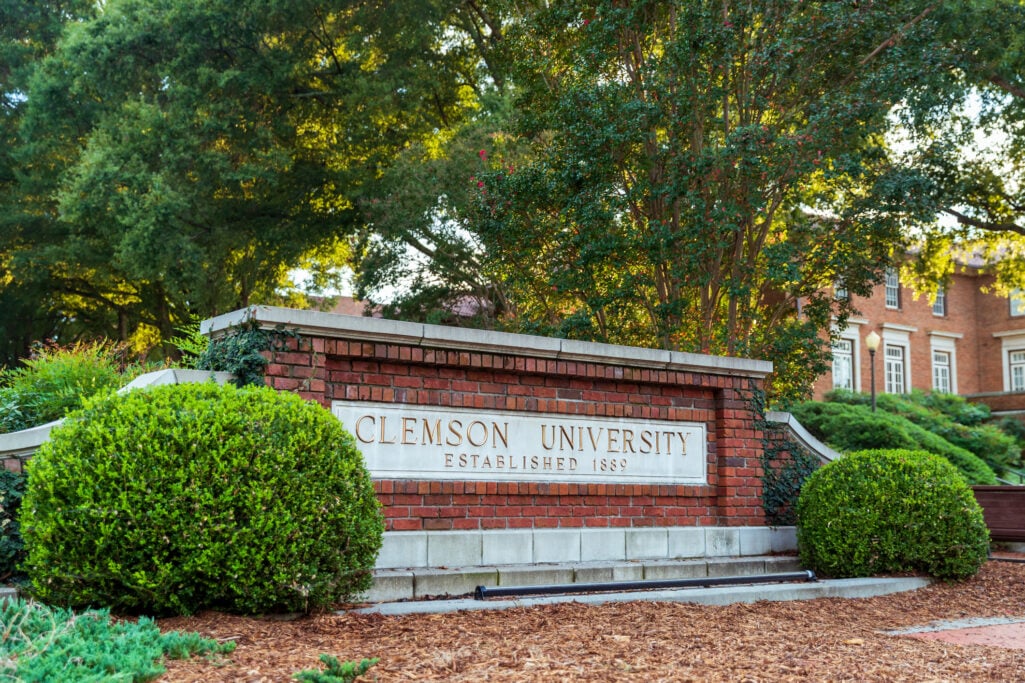 Funk Associates Assists Clemson University with the Recruitment of 16th President
Following a national search, Funk Associates has assisted in the recruitment of Kevin Guskiewicz as the 16th president of Clemson University. “The search committee was overwhelmed with the robust and highly qualified candidates who expressed interest in leading our great University,” said search committee chair Cheri Phyfer. “Dr. Guskiewicz rose to the top of a remarkable list with his deep understanding not only of higher education on the national level, but familiarity with Clemson University and its land-grant mission.”
“Kevin Guskiewicz comes to Clemson with extensive experience leading national universities coupled with a vision to guide Clemson into its next chapter,” said board chair Kim Wilkerson. “The entire board of trustees is excited to welcome Dr. Guskiewicz and continue to build upon Clemson’s 136 years of excellence and service to the citizens of this state.”
Fundraising. Mr. Funk also explained that resource development is one of the most consequential and time-consuming responsibilities of the modern presidency. “You need not be a professional fundraiser, but you must be comfortable in that world: accompany your chief advancement officer on donor visits, join campaign planning, learn the difference between annual giving, major gifts, and planned giving—and learn how to make an ask,” he said. “Boards place enormous weight on a candidate’s appetite for this work. It is not optional preparation.”
Finance. A president who cannot read a balance sheet or engage credibly with a chief financial officer is operating at a serious disadvantage, Mr. Funk also noted. “Learn the institution’s revenue mix—tuition, appropriations, endowment draws, research grants, auxiliaries, debt service—and the difference between restricted and unrestricted funds,” he said. “Ask your CFO to walk you through the financial statements. When a financial crisis comes, and at some point it will, the board and the campus will look to the president for steady, informed leadership. That capacity must be built long before the crisis arrives.”
Calibrate Ambition with Judgment
“Look beyond the campus gates, too,” Mr. Funk added. “Intercollegiate athletics has become one of the most volatile areas of university administration, reshaped by NIL rules, conference realignment, and the transfer portal. Understand how athletics is financed—and how deficits there can ripple across the broader institution.”
For public-university aspirants, the state legislature is equally consequential: appropriations decisions shape faculty salaries, tuition, and capital projects, Mr. Funk explained. “Learn how the process works in your state and build relationships with legislators before you need them,” he said. “And be a civic leader, not just a campus administrator — serve on community boards, join economic development conversations, show up as a neighbor. Universities are anchor institutions, and presidents are expected to act like it.”
Related: Funk Associates Retained by Troy University to Assist Chancellor Search
None of this works without relationships, which are the currency of leadership. “Learn how boards think—they hire presidents and, when necessary, remove them—and seek legitimate opportunities to present to trustees and to speak the language of governance and fiduciary duty,” Mr. Funk said. “Earn the faculty’s respect by honoring shared governance, following through on commitments, and disagreeing transparently when you must.”
Mr. Funk also says to treat administrative peers with the same fairness; how you treat colleagues when you have nothing to gain says everything about the kind of leader you will be. And cultivate relationships broadly and authentically, without an agenda: with donors, legislators, staff, students, and peers across the profession. The provost you treat dismissively today may sit on the search committee evaluating you a decade from now.

“Finally, calibrate ambition with judgment,” Mr. Funk concluded. “Pursue presidencies where your background genuinely fits the institution’s needs; a career spent entirely at small liberal-arts colleges rarely prepares one to lead a flagship research university with a health sciences operation and a multi-billion-dollar budget, and a poorly matched candidacy can do reputational damage.”
Funk Associates is an executive search firm specializing in higher education executive recruitment. The firm has recruited chancellors/presidents for two-thirds of all public AAU universities. The firm has also recruited presidents or chancellors to more than one-half of U.S. News & World Report’s recently published “Top 30 National Universities.” Over time, it has conducted more than 425 searches for college and university presidents and chancellors as well as an even greater number of provosts, deans, and various vice presidents.
Mr. Funk is a widely respected search consultant serving higher education. He has been called the “guru of higher education recruiting” by The Chronicle of Higher Education and is listed as one of the 200 best executive recruiters in the world in The Global 200 Executive Recruiters: An Essential Guide to the Best Recruiters in the United States, Europe, Asia, and Latin America (Jossey-Bass, Inc.)
Related: Funk Associates Assists the University of North Florida with the Recruitment of Eighth President
Contributed by Scott A. Scanlon, Editor-in-Chief and Dale M. Zupsansky, Executive Editor – Hunt Scanlon Media