Executive Search Evolves, but Relationships and Judgment Still Matter Most

September 29, 2026 – Executive search is evolving as firms face growing pressure to deliver stronger talent outcomes while providing deeper advisory value to clients and candidates. The most effective search organizations are looking beyond individual assignments to build broader networks, strengthen market intelligence, and create relationships that endure across careers and leadership transitions. That shift is placing renewed emphasis on how search firms differentiate themselves in an increasingly competitive and technology-enabled market.
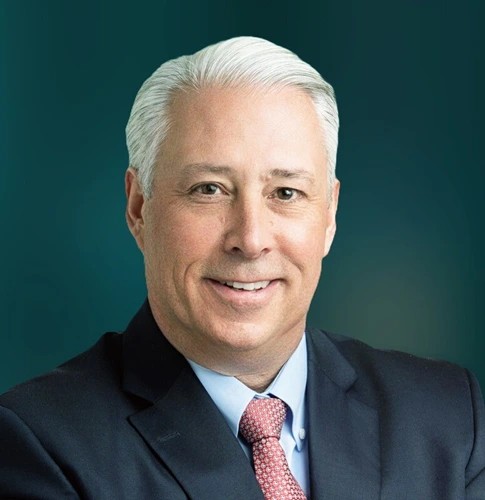
That evolution is also changing how veteran search professionals think about the fundamentals of the business, from candidate relationships and cultural fit to the role of technology and experienced operators in the search process. Those themes are at the center of the perspective shared by Tom Johnston, founder and managing partner of Synova.
“Everyone in search says it’s a relationship business, then they build the whole firm around the client,” Mr. Johnston said. “The client signs the agreement, so the client gets the attention. Here is what gets missed: no search closes without a candidate. The candidate is half the transaction, and most firms treat that half like inventory.”
Synova organizes the other way. “We meet people years before they are candidates, and we stay with them after,” Mr. Johnston explained. “That is why we run a career management practice at all. It is the book, the Career Management Services curriculum, seminars, and a real alternative to outplacement for companies going through reductions. None of that is a search. All of it is the reason the right person picks up the phone when a search finally comes along. A relationship you only activate when you need something isn’t a relationship. It’s a list.”
Mr. Johnston has spent more than 30 years in executive search. Inside the industry he is known as the headhunter for headhunters, the person search firms call when they need to hire their own. His placements run from partners and vice presidents to CEOs and CFOs, across dozens of sectors. Mr. Johnston is the author of Where’s Your Buffalo? and the creator of MyHuntPath, a 31-video career curriculum. He built Synova around a broader premise: talent relationships should extend across an entire career from career management and executive search to interim leadership, advisory work and ultimately the boardroom.
Mr. Johnston recently sat down with Hunt Scanlon Media to discuss how executive search has evolved, the role of relationships and human judgment in the process, how AI is changing the way firms work, and why cultural alignment remains critical to successful placements.
Tom, which lessons from earlier in your career have had the greatest influence on how you conduct a search today?
The lesson that stuck came early, and it cost me nothing to learn. Help people when you have no reason to. Take the call from the candidate who isn’t right for anything you’re working on. Give the honest answer instead of the convenient one. Ten years later that person is running a division, and they remember who treated them like a human being. That’s also how I ended up recruiting for the recruiters. Search firm owners started calling me to hire their own people, because I had been straight with them when there was nothing in it for me. Headhunter for Headhunters was not a title I went looking for. It came from the same place everything else does in this business, which is being the person somebody trusts enough to call.
What have decades of interviewing senior leaders taught you about identifying qualities that don’t show up on a résumé?
Start with the goal of the role, not the job description. What does this person actually have to accomplish, and by when? Experience and industry matter, they get you into the conversation. They are the easy part to read on paper. What decides the outcome is culture fit and alignment on vision and goals. Does this person want what this company is trying to become? A résumé cannot tell you that. You get it out of a real conversation, and you get it faster when the person asking has actually held the job. That is why our senior advisors sit in on searches. The hidden potential everyone talks about is usually not hidden. It is just that nobody asked the right question.
Executive search has become far more data- and technology-driven. How do you use AI and new tools without losing the judgment you built over decades?
I started in a business where research meant the Thomas Register and the Red Book. Physical books. You looked up a company, found a name, picked up the phone and hoped. The tools have changed more in the last three years than they did in my first 25. We use all of it. Custom-trained engines help us build search briefs that capture what success in the role really looks like. AI helps us pull a candidate’s full picture out of resumes, publications, conference talks. It accelerates market mapping so my people spend their time on judgment instead of data entry. What it does not do is decide. Technology makes us faster and better informed. A person still has to look another person in the eye and make the call. AI-empowered, human-led. We will not give up the second half of that.
How has your approach to evaluating cultural fit and long-term potential changed over the years?
Earlier in my career I weighted track record heavily. Where someone had been, who they had worked for, what the logo said. That is the pedigree trap, and it is comfortable, because it is defensible. Now I spend most of my time on alignment. What does this person want next, what are they exceptionally good at, and does that match where this company is actually going? A leader with a perfect résumé and the wrong goals will leave in 18 months, and everybody loses.
Synova brings experienced operators and senior advisors into the search process. Did your earlier experience lead you to believe searches benefit from people who have held the role?
It is not a belief, it is the fix for something I watched go wrong for years. Most firms staff a search with a recruiter who has never worked in the field, even an excellent recruiter benefits from having someone at the table who has actually held the role. That is why we built our senior advisor model. We have recruited over 100 senior advisors, active leaders and functional experts who have recently held the roles we recruit for. They do three things a recruiter alone cannot. They get passive candidates on the phone, because a sitting CFO takes the call from another CFO. They assess the way an operator assesses, and they tell the client honestly what the role actually requires, which is often different from what the position description says. The best talent comes from people who have sat at your table.
What parts of the traditional search process still work exceptionally well, and what have you deliberately changed?
What works is old-fashioned recruiting. Pick up the phone. Build the relationship before you need it. Do the research yourself. Everything that has come along in thirty years has made that faster, and nothing has replaced it. What we changed is the structure around it. Advisors who have done the job, instead of recruiters guessing. Economics in plain sight, with limited off-limits restrictions and no hidden charges. Flexible talent alongside permanent search, because sometimes a client needs a leader in days, not months. A relationship that continues between searches instead of going dark until the next requisition. Same craft. Different firm around it.
You have said the job boards broke the job search process. Broke it how?
They turned a human process into a volume game on both ends. A candidate fires off two hundred applications and hears nothing. A company gets four thousand résumés for one opening and runs them through a filter that screens out the best person in the stack over a keyword. Nobody is talking to anybody. Both sides are working harder and getting worse outcomes, and the people who suffer most are the ones in the middle of a career who do not know how the system actually works. That is a large part of why I wrote the book.
“We give a fund one partner across the whole portfolio, from talent diligence before the deal through board building at exit.”
You were an early pioneer in the interim executive industry. Where is the market today, and where do you see it going?
Interim used to be the thing you did when something broke. Now it is a legitimate way to run a company. You bring in a CFO for the integration, an operator for the turnaround, a project leader for the carve-out, and you get someone who has done it eight times instead of someone learning on your dime. The part the industry still gets wrong is pricing. Too much of it is opaque. We show every line: the professional’s compensation, our fee, the employment costs. For us, interim isn’t a separate business from search; it’s another way to solve the client’s talent problem
What does the Synergy Program solve that a traditional firm cannot?
A fund does not have one talent problem. It has dozens, across a portfolio, on a clock. Most firms sell you one search at a time, traditional search structures can also create expanding off-limits restrictions across a portfolio. We give a fund one partner across the whole portfolio, from talent diligence before the deal through board building at exit. Every level, not just the C-suite, because great CEOs create strategy and great operators create EBITDA. One agreement, preferred structures, and a portfolio partnership credit, so when your firm creates the opportunity you share in the value created. Our team brings experience from more than 200 searches supporting PE-backed portfolio companies. So while the Synergy structure is new, the work behind it isn’t.
You share a portion of every search fee based on contribution. Why does that matter?
Search has always paid the person who owns the relationship and largely ignored everyone else who made the placement happen. The researcher, the advisor who opened the door, the colleague who knew the right name. So people hoard. They sit on candidates and protect accounts, and the client gets a smaller firm than the one they hired. Pay everyone for what they actually contributed and the whole firm shows up on every search. It also means an experienced recruiter can build a practice here without giving up most of what they produce. The client doesn’t hire one recruiter; they get the economic incentive of the entire Synova network working on the problem.
Related: Hunt Scanlon and HSiQ Build a New Performance Model for Executive Recruiters
Contributed by Scott A. Scanlon, Editor-in-Chief and Dale M. Zupsansky, Executive Editor – Hunt Scanlon Media