AI-Native Talent Won’t Fix AI-Foreign Organizations
June 17, 2026 – As artificial intelligence moves from experimentation to enterprise-wide adoption, organizations are grappling with a fundamental question: what does it actually mean to become AI-native? While the term has quickly entered the business lexicon, many leaders are still struggling to define the capabilities, operating models, and cultural shifts required to make that vision a reality.
“Some of the most honest conversations about artificial intelligence happen at conferences,” Veronica Lawrence-Ortega, CEO and co-founder of Inclusivity EQ LLC, recently told Hunt Scanlon Media. “There is a particular psychological safety in those rooms, where leaders compare notes on where their organizations are actually heading rather than where the press release says they are.”

This year, Dr. Lawrence-Ortega has attended four such gatherings: two academic conferences, a major executive search and human resources convening, and a government forum. “AI sat at the epicenter of everyone, and a single phrase kept rising to the surface. We need to become AI native,” she said. “At one of these events, I asked the room a simple question. How are we defining AI-native, and what is the roadmap to move an AI immigrant workforce toward that state? The room went quiet. Not from embarrassment, but from reflection.”
“We are all searching for footing in an ecosystem that is shifting faster than we have calibrated for, where the impact of AI arrives as a revolution while our organizations can only absorb change as an evolution,” Dr. Lawrence-Ortega added. “Inside that silence sits an inversion worth naming. When leaders say they need an AI native workforce, they are delegating to individuals a transformation that belongs to the organization. We are asking job applicants to arrive AI-native, then onboarding them into AI-foreign companies. No one would hire for a skill first and write the job description and performance standards afterward. Yet that is precisely the sequence that hiring for AI natives proposes.”
Why the Words Matter
Lexicon is never just decoration on strategy, according to Dr. Lawrence-Ortega. “Language primes how people receive a concept before any strategy document is read, shaping whether they lean toward adoption or brace for resistance,” she said. “The term “native” carries a specific connotation.”
Marc Prensky introduced it in 2001 to distinguish digital natives, who were formed inside a technological environment, from digital immigrants, who arrived later and learned it as a second language while retaining a permanent accent. “Nativity, in this sense, is a condition of formation rather than an achievement,” Dr. Lawrence-Ortega explained. “A workforce formed before generative AI cannot be reborn into it, no matter how sincere the ambition is. This is why the word does quiet damage when applied to people.”
Related: How Leading Search Firms Are Turning AI Into Competitive Advantage
“A term that defines belonging by formation tells every experienced employee that they are excluded from the future state by definition,” Dr. Lawrence-Ortega continued. “Vocabulary that excludes people manufactures the very resistance it later blames on them. If we want adoption, our language must leave the door open. The goal is not to abandon the term, but to aim it at the right object.”
People Become Fluent, Organizations Become Native
Dr. Lawrence-Ortega explained that here is the distinction that resolves the confusion. “People can only become fluent,” she said. “Fluency is developmental and built in two layers. Data literacy is the floor: the ability to read, question, and interpret what AI systems consume and produce. AI fluency is the working standard: the ability to collaborate with a system, calibrate trust in its output, and recognize when it is confidently wrong. The layers are sequential because fluency without data literacy is simply confident use of output that one cannot verify.”
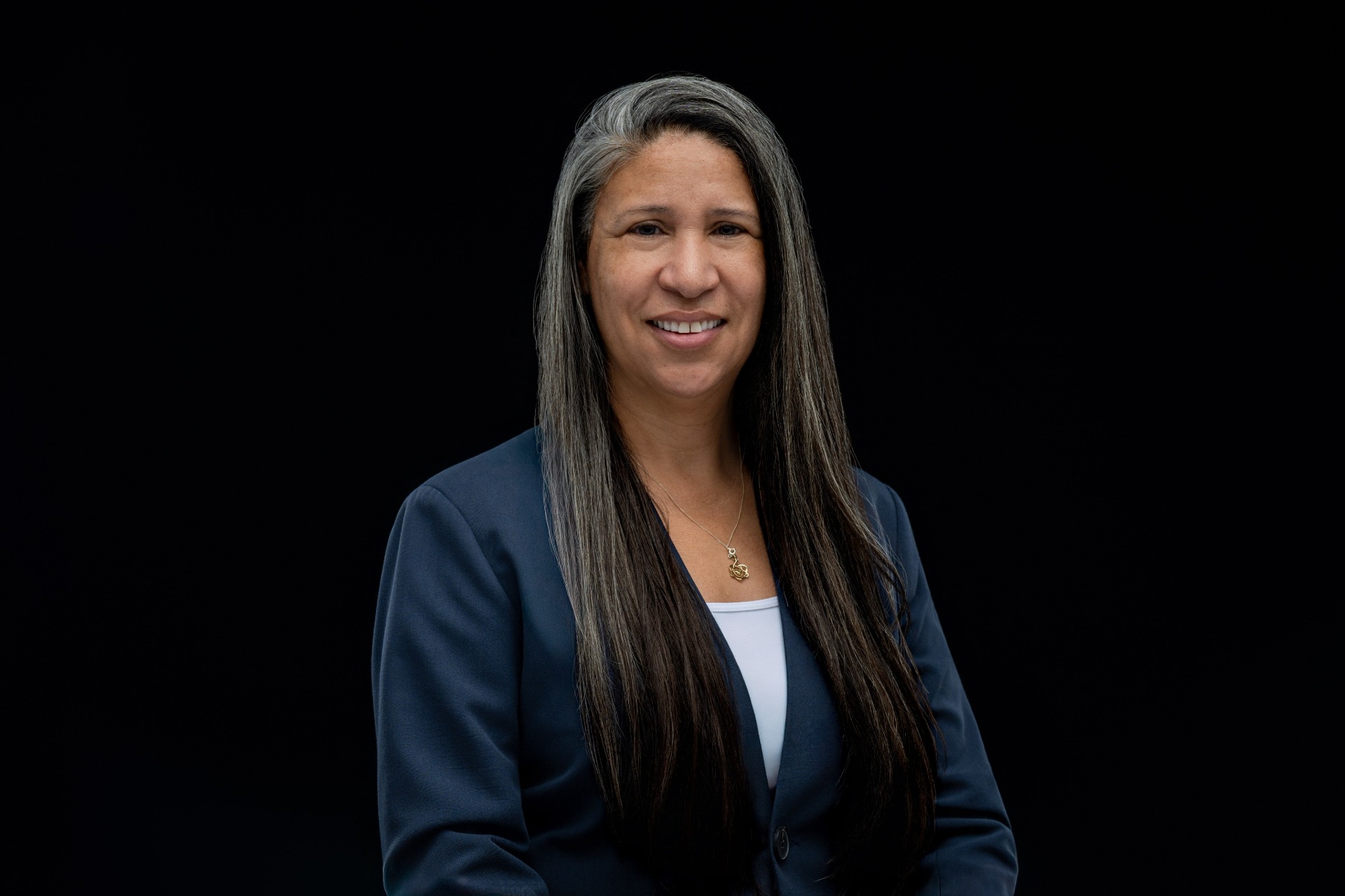 Veronica Lawrence-Ortega, EdD, is the CEO and co-founder of Inclusivity EQ LLC, a consulting firm specializing in human-centered AI adoption, risk calibration, and change management. She is a retired U.S. Navy Master Chief and the author of Conscious Human at the Speed of Change.
“Organizations, by contrast, can genuinely become native, but only by design,” Dr. Lawrence-Ortega noted. “An AI native organization is not one whose people were born into AI. It is one whose workflows, decision rights, and governance were architected with AI assumed present from the start, rather than bolted onto processes designed for a different era. Picture a building designed for electricity beside a Victorian house retrofitted with wiring. Both have lights. Only one was conceived for them.”
A Working Definition
If we want AI native organizations, Dr. Lawrence-Ortega says that we must define the term in robust reality rather than general concepts. She proposed three layers.
1. The knowledge layer. The organization understands its own data: where it lives, what it means, and what condition it is in. Its people hold literacy in the specific systems being implemented, including their capabilities, their failure modes, and their boundaries. Generic AI awareness is not enough; fluency attaches to the actual tools in the actual workflow.
2. The governance layer. The organization operates a solid governance and ethics system with explicit decision rights and clearly defined handoff points, meaning the documented line where machine authority ends, and human authority begins, written down before deployment rather than discovered after an incident.
3. The human layer. Roles are defined by loop position. A human in the loop approves each decision before it takes effect. A human on the loop supervises autonomous operation and retains the ability to intervene. A human out of the loop has delegated the decision entirely. An AI-native organization is not one that has adopted a single posture. It is one that can state, for every consequential class of decision, which posture applies and why, including where agentic and generative systems hold decision power and where they do not.
Related: The Leadership Reset: What AI is Exposing About Today’s Executives
“Once this definition is in place, the hiring question transforms,” Dr. Lawrence-Ortega said. “Talent leaders stop sourcing for an undefined trait and start hiring to a defined system. The job description writes itself from the architecture, which is the order hiring has always worked in.”
Reverse Engineering the Migration
A defined destination creates a responsibility: the organization must reverse-engineer the roadmap that carries its current workforce there, with a precise change-management plan rather than a slogan, Dr. Lawrence-Ortega explained. “The migration moves through three states,” she says. “First, baseline the current state honestly, including what people can do today and what the organization actually knows about its own data and decisions.”

“Second, build the transient state, in which infrastructure is constructed, and knowledge and ability are deliberately created within the work itself through real problems, role-based fluency standards, and communities of practice rather than standalone training events,” Dr. Lawrence-Ortega added. “The transient state must also measure what people can do without the tools, not only with them, because the capability that is never exercised quietly fades while confidence remains.”
“Third, arrive at the desired end state, where the organization is native by design and its people are naturalized citizens of it: fully fluent, full standing, and yes, still carrying an accent,” Dr. Lawrence-Ortega continued. “The metaphor strains, as metaphors do, but it strains honestly. Citizenship is the goal. Rebirth was never on the table.”
An Invitation
Dr. Lawrence-Ortega says that for the talent community, this reframing offers immediate practical footing. When a client asks for AI native talent, the most valuable response is a question. How is your organization defining “AI-native,” and which system will this person be onboarding into? And for all of us who lead, one question keeps the entire conversation honest. If no individual in the company becomes more capable, what exactly becomes native?
“The ecosystem will keep moving at the speed of change,” Dr. Lawrence-Ortega said. “Our duty as leaders is not to chase the vocabulary but to define it, with clarity, with intention, and with language that invites our people into the future state rather than excluding them from it. The calibration ahead belongs to all of us. I welcome the collaboration and the conversation.”
Related: Powering an AI-Driven Workforce
Contributed by Scott A. Scanlon, Editor-in-Chief and Dale M. Zupsansky, Executive Editor — Hunt Scanlon Media