The Expanding CFO Mandate: From Scorekeeper to Value Creator

March 24, 2026 – As business complexity increases across industries, the office of the CFO is experiencing a significant transformation. Traditionally focused on financial stewardship, today’s CFO organizations are evolving into enterprise-wide strategic drivers—supporting growth, overseeing risk, enabling transformation, and acting as key partners to the CEO and board. With the CFO role increasingly viewed as a pathway to the CEO position, the structure, capabilities, and leadership within the finance function are being reshaped. This shift has important implications for how organizations design their finance teams, cultivate future leaders, and attract the next generation of CFO talent.
Once viewed primarily as the organization’s chief scorekeeper, the CFO role has expanded into that of a strategic architect responsible for navigating complexity, driving transformation, and shaping long-term value. Clem Johnson, president of Crist|Kolder Associates, has agreed to share insights around CFO search dynamics stemming from his team’s work with three recent clients: Oshkosh Corporation, Booz Allen, and AO Smith.

Oshkosh Corporation is a roughly $10 billion publicly traded manufacturer of heavy-duty specialty vehicles. “Increasingly, the company is leveraging its technologies to expand its autonomous and robotics capabilities,” said Mr. Johnson. “As such, they wanted a CFO who could “straddle their worlds” of traditional vehicle manufacturing and NextGen technologies, ideally with international experience. Lastly, they wanted someone who could help reshape the investment narrative in a highly credible way with Wall Street, and of course someone who would fit the Midwestern (hard-working, humble, but driven) culture.”
Matthew Field turned out to be the right candidate for the position. “Matt spent some of his early years as an equity analyst with Goldman, then went on to a 20+ year career in finance at Ford Motor Company before taking on the CFO role at Joby Aviation,” Mr. Johnson said. “Matt’s experiences perfectly cut across the story telling (Goldman analyst), traditional vehicle manufacturing (Ford), International (exPat assignments) and NextGen tech (Joby) dynamics that we were solving for, and he and his wife are native Midwesterners that wanted to come back home, so he aligned really well culturally, too. Just one of those great searches that clicked on every level.”
Booz Allen Search
Booz Allen is at the tail end of a large-scale transformation from strategy consultants serving the Department of Defense to a provider of cutting edge AI, Cyber, robotics and quantum solutions. The firm has a number of ‘stealth tech’ investments and new partnerships with companies like Silicon Valley’s Andreesen Horowitz (now called a16z) and Amazon Web Services, among others, and has a burgeoning venture group to continue to fuel their expansion into innovative technologies.
“As such, we are looking for someone who has been through large-scale transformations and ideally, has deep M&A experience to help bring to life the investment thesis that this is a cutting edge AI company with extraordinary positioning,” Mr. Johnson said. “Everyone at Booz Allen is incredibly accomplished, but maintains a powerful spirit of service and humility, so it’s essential that we find someone uniquely adept at driving transformation without losing sight of the company’s northstar of fostering and protecting American intelligence and values globally. This is another instance where we need to thread the needle between someone accustomed to driving change and growth at scale, redefining the narrative to investors, and meshing seamlessly into a well-established culture.”
AO Smith is a 150 year old manufacturer of hot water heaters, boilers, and pump systems, based in Milwaukee. “We are replacing their CFO, Chuck Lauber, who is retiring later this year after a fantastic career,” said Mr. Johnson. “In this case, we have a relatively new CEO, Steve Shafer, who was brought in after a phenomenal run at 3M Company. Steve is looking for a true strategic partner to help continue to optimize the company’s portfolio of great brands, and to continue to drive innovation throughout every aspect of the business. We are looking for a world-class public company CFO who is both strategic and yet hands-on and operationally inclined. With so many great opportunities in front of them, Steve needs a discerning partner who can challenge him and the rest of the organization to channel their energies into the opportunities that will yield not just the easy layups, but will position A.O. Smith optimally for the long-term.”
Related: The Evolving CFO: Seven Traits Defining High-Impact Finance Leaders
Mr. Johnson joined Crist|Kolder in 2007 and has 25+ years of executive search experience. He has conducted senior executive and board searches internationally for major organizations across functional disciplines, with an emphasis on technology, industrial, retail, consumer products and professional services industries. In addition, Mr. Johnson has extensive experience assisting private equity firms and other investors with the recruitment of their portfolio companies’ senior leadership teams, with a particular functional emphasis on board of director, CEO and CFO disciplines.
Mr. Johnson recently sat down with Hunt Scanlon Media to discuss how the CFO role has evolved from a traditional finance function into a central driver of strategy, transformation, and value creation across today’s organizations.
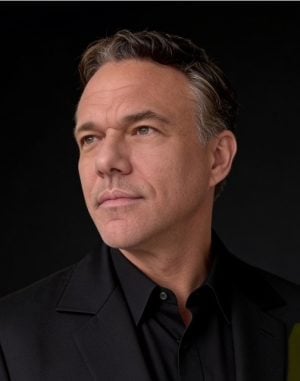
Clem, how has the CFO mandate changed since five to 10 years ago?
I’ll go back even further. In the early 2000s, in the wake of the Enron scandal and others like it, the CFO role took on a decidedly defensive posture, focused on risk mitigation, compliance and rigorous controls. The only real lever a CFO had to pull was managing the balance sheet. Fast forward to say 2010, a few years after the global financial crisis, and the CFO mandate took on more dimensions – the CFO became more of a ‘utility player’ who had to be highly conversant in not just finance, but operations, IT, even the commercial side of the business. CFOs of that era had access to more levers they could pull, and were expected to be more hands-on, business-oriented, and operationally oriented than their Sarbanes-era predecessors.
What about in more recent years?
The most profound changes have accelerated over the last six years following the pandemic. The best companies took advantage of the crisis to accelerate transformation efforts, and most CFOs played a leading part in those efforts. As a result, their remit widened even further, and fundamentally changed the nature of the CFO; the technical and tactical aspects of ‘keeping score’ are table stakes and increasingly automated. Almost all of our clients are now looking for their CFO to be major architects and executors of growth strategies and shareholder value creation. In short, CEOs and boards aren’t asking their CFO, “Can you keep us out of trouble?” They’re asking, “Can you help us win?” All of this ‘role creep’ has given rise to the patterns we see today: in many organizations, the CFO is the de facto “number two” executive behind the CEO, and is increasingly seen as both an internal and external ‘ambassador of the brand’. It’s no wonder then, that the current sitting CEOs have the highest representation of former CFOs than any other time in history.
When did the shift from steward to value driver really begin—and why?
I’d point to the post-global financial crisis period as the roots of this shift, with a real acceleration brought on by the Covid-19 crisis. From my vantage point, three catalysts mattered. The cost of capital careened from expensive to almost zero, and back to expensive again. This forced CFOs to make sharper capital allocation decisions, which in turn required better systems that provided actionable, real-time financial insights. In addition, boards became more sophisticated consumers of financial metrics, especially with more former CFOs and investors joining boards. As a result, CFOs needed to have their finger on the pulse of every aspect of the business and be able to generate scenario planning models almost on-demand. Lastly, ownership models converged and the ‘pace of play’ elevated regardless of capital structure. Public companies became scrappier and started behaving more like data-obsessed PE-backed businesses, while PE firms demanded public-company rigor and sophistication. The CFO became the natural integrator across strategy, operations, and capital markets—and once boards saw that capability, there was no putting the genie back in the bottle.
How do IPOs, major transactions, or transformations permanently reset expectations?
These moments are role-defining (and often career defining) for CFOs. Once a CFO has taken a company public, led a complex carve-out, refinancing, or take-private deal, or driven a multi-year enterprise transformation, the CEO and board’s expectations permanently elevate. After that, the CFO is no longer just the “finance leader.” They become a trusted advisor (and in some cases, a counterweight) to the CEO. They often serve as the ‘Rosetta Stone’ internally, translating between operators, investors, and directors. They are often the board’s first call in moments of ambiguity or stress to help shape a crisp narrative and to address or allay concerns. At its core, there has been a fundamental shift from “reporting the news” to “shaping outcomes.”
What differentiates CFOs who succeed in both PE and public environments?
I think the best CFOs share three traits that allow them to be successful regardless of ownership structure. The first is contextual adaptability. They understand what matters when. PE rewards speed, focus, and cash discipline. Public markets reward consistency, narrative, and credibility that comes through executing reliably on the longer-term vision. As we said earlier, great CFOs are incredibly well-rounded and are the central nervous system of most organizations. As such, they can adapt as challenges arise without losing authenticity, which engenders trust in the investment thesis, whether it’s with private equity sponsors or institutional investors. The second is the ability to separate signal from noise. CFOs are inundated with data. The ability to cut through all of the static to find the most reliable source of truth is essential. A necessary corollary to this is the discernment to execute with imperfect or incomplete information. The third is narrative fluency. They can tell a coherent story about where they are on the value creation path, strategic trade-offs, and long-term direction, even when things go sideways in a given quarter or the data is imperfect. This combination is surprisingly rare and incredibly valuable. CFOs who possess these traits also maximize career optionality – great talent flows from PE to public and back again.
“CFOs need to be almost as fluent in all aspects of the business as each functional expert, and when they don’t know, they have to readily admit it and ‘get smart’ quickly.”
What leadership traits matter most now for long-term CFO success?
A few stand out clearly: Judgment over precision – knowing when “directionally right” beats “technically perfect.” Especially in today’s data-saturated world, the ability to execute wins versus perfect insights that are slow to mobilize or never enacted. Influence and impact is also important. CFOs need to be almost as fluent in all aspects of the business as each functional expert, and when they don’t know, they have to readily admit it and ‘get smart’ quickly. This engenders a deep respect and trust for the CFO’s competence, which can then translate to his or her ability to influence outcomes. Translating data into strategic insights is essential. These days it is just as important that the CFO knows when to say yes and when to say no – it’s not just accruing wins; it’s accruing the right wins that create the most value. I’d also point to leadership intangibles. Especially in an increasingly AI-driven world, the human quotient matters. Successful CFOs know how to harness the aggregate talent of their direct teams, and they go out of their way to ensure their people get developmental exposures that will help them accelerate their careers. The little things matter, and CFOs who advocate for their people and listen to them invariably have higher performing teams, even when (and especially when) the going gets tough. Humility, drive, integrity, grit, doing the right thing to benefit all the stakeholders… these are the essential traits that distinguish world-class CFOs.
Related: CFO Recruiting Summit — Beyond the Balance Sheet: Executing Growth and Value Creation
Contributed by Scott A. Scanlon, Editor-in-Chief and Dale M. Zupsansky, Executive Editor – Hunt Scanlon Media